Prepare Job References with Permission and Useful Context
A reference list contains other people’s contact information. Ask before sharing it, check the details and give each willing referee enough context to respond accurately.
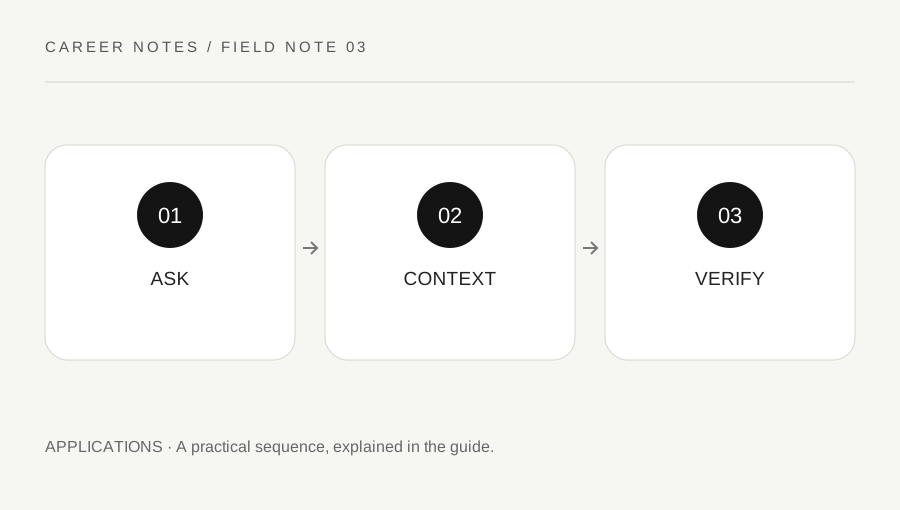
Original explanatory diagram. Examples illustrate a method or decision; they are not claims of personal testing.
Choose people who know the relevant work
List possible referees who can speak from direct knowledge of your work, study or other relevant activity. Consider what they actually observed rather than choosing only the most senior name. A person who reviewed a project closely may offer more useful evidence than someone whose title sounds impressive but who barely knows your contribution.
Read the employer's requirements for the type and number of references. They may ask for a particular relationship or a process through an official channel. Do not assume that a personal contact fits every request. If the instructions are unclear or your circumstances make the requested arrangement difficult, ask the employer how to proceed rather than inventing a referee or misrepresenting the relationship.
Ask privately before sharing contact details
Contact the person through a route you are authorized to use and ask whether they are willing to act as a reference. Explain the role or general opportunity, the likely timing and what kind of work they observed. Make it easy to decline. A name in your address book is not permission to distribute their phone number to every application.
Confirm the preferred contact details and any organization-specific procedure. Some people may need requests to go through an employer's formal reference process. Respect that boundary. Keep the list in a private location and provide it through the recruiting channel when requested. Avoid putting full referee contact details on a public portfolio or broadly circulated CV unless there is a clear agreed reason.
Give a concise factual context note
Once someone agrees, offer the relevant role description and an accurate summary of the work you did together. Remind them of dates, project names or responsibilities they can verify. Do not write a script that asks them to make claims they did not observe. Their reference should remain their own truthful account.
Imagine a former project supervisor agrees to help. The applicant sends a brief private note identifying the coordinator role, the shared project and the tasks the supervisor reviewed. They include the submitted CV if appropriate, with no unnecessary sensitive material. This helps the referee recall evidence without pretending the applicant managed work that belonged to someone else.
Keep the list current and close the loop
Before using the list again, check whether the person remains willing and whether the contact information is still suitable. Let them know when a request is likely through the agreed channel, while avoiding repeated pressure for status. Thank them for the time they actually provide and update them appropriately when the process concludes.
If a person declines or cannot respond, choose another genuine option that meets the employer's requirements. Do not create an alternate identity or use a friend's details while describing them as a manager. A well-prepared reference process respects the referee's privacy, the employer's request and the limits of what each person can honestly confirm.
Keep references separate from testimonials
A short public testimonial and a private recruitment reference serve different purposes. Permission to quote one sentence on a portfolio does not automatically authorize sharing a person's full contact information for a hiring process, and the reverse is also true. Record what the person agreed to and ask again when the use changes materially. This simple distinction prevents a useful professional relationship from being treated as blanket permission for every future publication or application.
A practical checklist
Choices are saved in this browser. Reset them here or clear this site’s browser storage.
Questions that come up
Can I list someone without asking?
Ask first and confirm the contact route. They may be unavailable, unwilling or subject to an organizational process.
Should the referee repeat my exact wording?
No. Give factual context and let them provide their own accurate account of what they observed.
Is a public testimonial the same permission?
No. A testimonial and a recruitment reference are different uses; clarify the agreement for each.
References & scope
Background references checked on 18 October 2026. Worked examples and diagrams are original teaching material.