Show Portfolio Evidence Without Exposing Confidential Work
A strong example explains your contribution, but access to work does not automatically grant permission to publish it. Choose a permitted presentation and keep private material out of the case study.
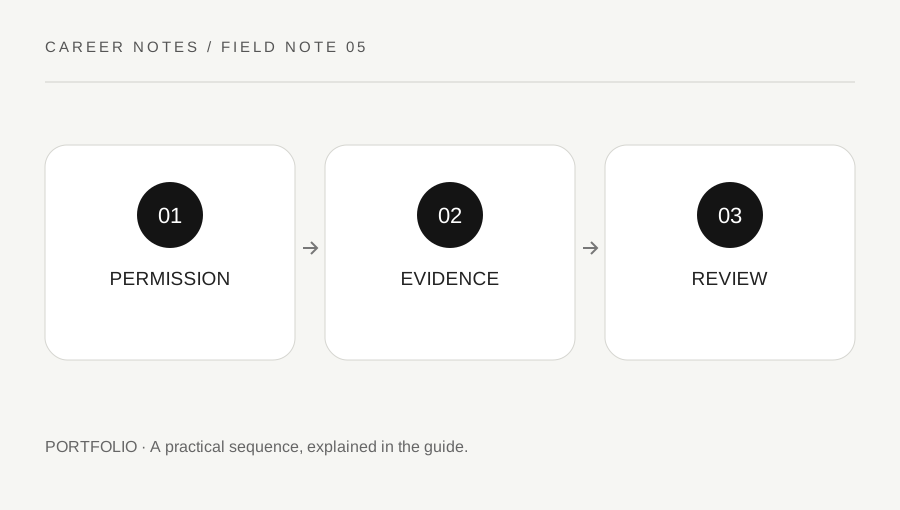
Original explanatory diagram. Examples illustrate a method or decision; they are not claims of personal testing.
Identify what you are allowed to show
List the source material you want to use and who controls it. A client deliverable, employer document, licensed image and your own explanatory text may have different conditions. Review the relevant agreement or policy and ask the responsible party when uncertain. This is a practical preparation step, not legal advice about a particular contract.
Do not assume that removing a logo makes every document suitable for publication. The content can still reveal personal data, internal processes, unreleased plans or recognizable client details. A portfolio's usefulness does not override those limits. Keep a private evidence inventory separate from what you intend to publish so you can decide the presentation before building a public page.
Choose a permitted way to explain the work
Where allowed, describe the problem, your role, constraints, decisions and outcome in your own words. Be precise about team contributions and avoid implying that you created work done by others. If the actual artifact cannot be shown, consider an approved high-level description or a clearly labelled independent demonstration that does not reproduce restricted material.
A reconstruction must not pretend to be the original client deliverable or fabricate results. Label illustrative data and explain what the demonstration is intended to show. WIPO's guidance distinguishes permission and licensing questions around using others' work; consult the relevant rights holder or an appropriate professional for a specific legal question rather than relying on a generic portfolio template.
Work through an anonymized-project decision
Imagine an applicant helped organize a confidential internal reporting process. They cannot publish the original dashboard. With the appropriate permission, they describe their own role and the workflow decisions at a level that does not reveal private figures. If they create a demonstration, it uses invented teaching data and is labelled accordingly rather than presented as measured business performance.
They check whether screenshots, filenames, comments and hidden sections contain identifiers before sharing. If permission is not available, they choose another example or explain their experience verbally within the limits they are authorized to discuss. A smaller permitted example can be more credible than an impressive-looking page that exposes someone else's information.
Review the actual published or submitted copy
Inspect the final export, not only the editable source. Check images, captions, document properties where relevant, links and download files. Ensure that any required credits and permission conditions remain visible. A private draft link may become broadly accessible if its sharing settings are wrong, so use the approved publishing route and verify access intentionally.
Keep a record of the scope of permission and revisit it if the use changes. Permission for a private interview presentation may differ from permission for a public website or promotional campaign. If a concern arises, remove or restrict the material through the appropriate route and contact the responsible party. The aim is useful evidence of your work with an honest account of contribution and a clear respect for the material's boundaries.
Avoid invented metrics in the absence of publishable results
If a result cannot be disclosed or was not measured, say what you can support instead: the deliverable completed, the review process followed or the decision you made. Do not replace unavailable figures with plausible-looking percentages. A case study can be informative without a dramatic outcome number. Distinguish observation, stakeholder feedback and formal measurement, and attribute each accurately. This helps an interviewer assess your reasoning without relying on claims that a client or employer could not verify.
A practical checklist
Choices are saved in this browser. Reset them here or clear this site’s browser storage.
Questions that come up
Does removing a client logo make a screenshot safe to publish?
Not necessarily. Content and other identifiers can still be confidential or restricted. Check permission and the actual material.
Can I invent a performance percentage?
No. Use supported outcomes and clearly label unavailable or illustrative information.
Is private interview permission enough for a public website?
Not automatically. Confirm the scope of the permission and ask when the intended use changes.
References & scope
Background references checked on 18 October 2026. Worked examples and diagrams are original teaching material.